Hey peeps!
I know it's been over a year since my last post, but boy have things changed! I'm now in my third year of dental school and things are getting crazy in many ways.
First off, I'm finally seeing my own patients! After two years of lectures and pre-clinical madness (well, the lectures continue on but there are fewer, and the madness is perpetual), I'm responsible for living, human beings. Treating patients is such a privilege. I'm so thankful to be where I am today.
Secondly, time is flying by faster and faster! I feel as if I've been saying this for a while now, but every year/month/week passes by at an increasingly alarming rate. I need to catch my breath every now and then. In similar news, I'm turning 25 next year -- that's hitting a quarter of a century, folks! Almost 25 consecutive years of living ... what an honor! #blessed
Finally, I think I'm starting to see the bigger picture! I've always prided myself on being able to step back and take a bigger look at things, but in retrospect I probably didn't know what I was saying and probably wasn't doing this. Oh well! But really, I'd like to think that things have changed. Life is short and we need to do more things that we really enjoy.
Anyhow, less sappy and more real. I'll try to resume posting here at some point, but since beginning this blog oh so long ago I've begun to diversify my online presence. If you click around here and there I'm sure you'll find my digital footprint. Where it leads to, no one knows!
In the meantime, a new idea has come to mind and I'm going to plant the seed as a new blog. But don't worry, folks -- the one you're reading now is staying here, forever!
E
Sunday, November 9, 2014

Wednesday, May 22, 2013
El Monte Health Fair
Hey peeps!
Last Saturday, UCLA's Pediatric Dentistry Club participated in a community health fair/screening in El Monte and I finally got to do more than Oral Hygiene Instruction (OHI)! Under the guidance of Dr. McCreedy from UCLA Pediatrics, us first years and second years also provided oral screenings.
Interestingly, our neighboring booths included a cosmetology station that offered free manicures, pedicures, and facials (not to mention a beauty kit raffle), as well as an exceedingly active Zumba troupe lead by a fearless leader. Quite an interesting sight.
Although we were initially expecting mainly children, we also saw a fair number of adults. In addition, the health fair also provided us with the fantastic experience to work with an extremely diverse and receptive community. I probably spoke, or attempted to speak, more Spanish and Chinese than I did English!
The hosts at the local church were also tremendously generous. The lunch was a pleasant surprise and the hospitality was like no other. Thank you, El Monte, for a rewarding day!
E
Last Saturday, UCLA's Pediatric Dentistry Club participated in a community health fair/screening in El Monte and I finally got to do more than Oral Hygiene Instruction (OHI)! Under the guidance of Dr. McCreedy from UCLA Pediatrics, us first years and second years also provided oral screenings.
Interestingly, our neighboring booths included a cosmetology station that offered free manicures, pedicures, and facials (not to mention a beauty kit raffle), as well as an exceedingly active Zumba troupe lead by a fearless leader. Quite an interesting sight.
Although we were initially expecting mainly children, we also saw a fair number of adults. In addition, the health fair also provided us with the fantastic experience to work with an extremely diverse and receptive community. I probably spoke, or attempted to speak, more Spanish and Chinese than I did English!
The hosts at the local church were also tremendously generous. The lunch was a pleasant surprise and the hospitality was like no other. Thank you, El Monte, for a rewarding day!
E
 |
| Saturday all-day crew (9am-3pm) with Dr. McCreedy! |
 |
| Keeping busy! |
Friday, May 17, 2013
Baby Teeth
Heya folks,
Below are some flashy pics of my recent preparations (aka drillings) and restorations (aka fillings) on ... BABY TEETH! For those of you wondering, Baby teeth are also known as primary teeth, milk teeth, and deciduous teeth.
The first thing I noticed was how incredibly small baby teeth are. It's quite an intuitive and obvious thing to notice, but it was only when I began making my preparations that I realized how minuscule they were, and consequently how little room there was for error. For the past few months we've been busy drilling away at adult teeth. As such, when we switched to working with baby teeth, the transition was more challenging than anticipated.
Mistakes were magnified; boxes were made too deep; isthmuses (or rather, isthmi) were made too wide; plenty of these bad boys were bought. I probably ended up making at least 5 of each!
Also, these pics were taken with my iPhone 5 (random).
Below are some flashy pics of my recent preparations (aka drillings) and restorations (aka fillings) on ... BABY TEETH! For those of you wondering, Baby teeth are also known as primary teeth, milk teeth, and deciduous teeth.
The first thing I noticed was how incredibly small baby teeth are. It's quite an intuitive and obvious thing to notice, but it was only when I began making my preparations that I realized how minuscule they were, and consequently how little room there was for error. For the past few months we've been busy drilling away at adult teeth. As such, when we switched to working with baby teeth, the transition was more challenging than anticipated.
Mistakes were magnified; boxes were made too deep; isthmuses (or rather, isthmi) were made too wide; plenty of these bad boys were bought. I probably ended up making at least 5 of each!
 |
| Restoration on tooth #I |
 |
| Preparation on tooth #S |
Getting there!
E
Saturday, March 23, 2013
Birthday status
Below is a lovely early birthday gift that I received from the fabulous Michelle!
It's a personalized, stainless steel bottle opener (er, tooth extractor?). I greatly appreciate the aesthetic tooth design as well! :)
Yesterday marked the final day of winter quarter exams, today marks the first day of spring break, and tomorrow marks my birthday. Thank you, Michelle!
E
 |
| Will not be left unused |
Tuesday, March 19, 2013
Thursday, February 21, 2013
Dental Anthropology and Forensic Dentistry
Dental Anthropology and
Forensic Dentistry
Eric C. Chen
Do you ever
idle around and channel flip until catching a split-second of CSI or NCIS, only
to realize one hour later that you’ve watched the entire episode? Have you ever
wondered how the ‘science’ actually works in real life in comparison to what
happens in all those addicting, romanticized crime dramas? More importantly,
have you ever seen a dentist solve any of these murder mysteries?
If you
answered ‘yes’ or ‘no’ to any of the aforementioned questions, please continue
reading.
But
seriously, although television has yet to see a bright, young – and attractive
– UCLA dentist solve an incredibly complex case on NCIS: Los Angeles, the field
of forensic dentistry has long been a driving force in the handling of dental
evidences to assist and solve innumerable cases around the world.
Before we
begin, let’s consider some interesting and relatively unknown pieces in dental
anthropology that relate to forensic dentistry.
For starters,
considerable metric variation in dental anatomy has been documented across
various worldwide populations. Sources of variation range from the genetic such
as sex-based and population-level factors all the way to the environment such
as stress and diet factors. The usage of modern technology in the form of
calipers and computed tomography have enhanced our understanding of dental
anthropology. Furthermore, the abundance and preservation of teeth as
historical records further attest to the reliability of dental records.
Sexual
dimorphism, for instance, is greatest dentally in human canine crowns.
Differences also exist in dental tissue proportions with females having
relatively more enamel than males, and males having relatively more dentine
than females.
In addition,
as shown from a 2005 study where researchers at the Department of Anatomy and
Biological Anthropology at Japan’s Saga Medical School examined dental
variation across 72 human populations, differences in mesiodistal and
buccolingual crown diameters as well as odontometric shape factors exist across
worldwide populations.
If we further
consider non-metric variation of dental traits such as shovel-shaped incisors
and the cusp of Carabelli, even more can be determined from a given dentition. Shovel-shaped
incisors, where the maxillary central incisors physically resemble miniature
shovels due to prominent lingual marginal ridges, are found more often in
people of Native American and Asian descent; the cusp of Carabelli, a small
additional cusp on the mesiolingual cusp of maxillary first molars, is found
more often in people of European and African descent. These traits represent just
a fraction of myriad dental traits recognized in dental anthropology.
Now to the fun
stuff. How does dental anthropology translate into forensic dentistry?
It turns out you
can reconstruct criminal events, identify remains, and even examine bite marks,
just to name a few things that forensic dentists do. The application of the
science of dental anthropology to the legal process centers around the
identification of remains to assist in detecting a crime, and even the
identification of dental records to determine the sex, age, ancestry, and even
stature of an alleged perpetrator or victim.
For example,
forensic dentistry has helped convict serial killers and rapists in many
prominent criminal cases through substantial bite-mark evidence where the
perpetrator was known to bite their victim.
Outside the
justice system, forensic dentistry has done even more. After the 2011 Tohuku
earthquake and resultant tsunami that devastated Japan, hundreds of dentists voluntarily
rallied to match dental records with unidentified bodies. By checking the type
of treatment and dental work done on the teeth of the bodies and using
biometric identification techniques, dentists were able to help countless
families come to terms with and properly bury their lost loved ones.
Without a
doubt, dental anthropology and forensic dentistry can be used in a multitude of
fascinating and beneficial ways to aid us not only in our understanding of the
human condition, but also in the triumph of justice and the rebuilding of our
weathered communities.
Although
largely unknown to the general public and unlikely to be revealed on a crime
scene show like CSI or NCIS any time soon, it is the unspoken, meticulous work
of thousands and thousands of dentists around the world who remind us of the
humility and significance in which we must serve in our esteemed yet humbled
profession.
Wednesday, February 6, 2013
UCLA Cardiovascular Patient Simulation
Awesome day today -- I experienced my first patient simulation!
In short, there's this robotic mannequin. But he's no ordinary robotic mannequin. He has a a respiratory rate. A carotid pulse. A dorsalis pedis. A measurable systolic and diastolic blood pressure, a partial pressure of Oxygen, as well as many many other potential readings. He also perspires. And has the ability to undergo a myocardial infarction, and - remarkably - reverse the process and instantaneously recover. He's also connected to a comprehensive screen readout.
In sum, this is a pretty incredible tool for instructors to teach us how to respond and react to real patient scenarios that we may encounter in our future practices.
I was also individually grilled for a couple minutes about drug cocktails (namely beta-blockers and a host of others that I could rattle off descriptions of at the time but can't quite recall right now ...) and their interactions.
It was interesting, and honestly quite exciting. Everyday is a step closer to the real thing!
Cheers,
E
.JPG) |
| Team photo! |
Tuesday, February 5, 2013
Amalgam Restorations
Hey all!
Here are some pictures of me as well as my first amalgam fillings! Over the past month we've worked on a number of tooth preparations and today we finally filled them!

Aka drill and fill.
And not to mention, bill!
But let's not get ahead of ourselves. I'm still many quarters away from doing this in the patient clinic on real human beings. :)
On that note, one of my classmates told me in lab today that I looked like a real dentist. It was actually quite reassuring to hear that, and of course I returned the compliment -- always keep your eyes on the prize peeps!
And at your request, I will be posting more pictures of my first year at UCLA Dental School!
Cheers,
E
 |
| My first amalgam restorations! |
 |
| Stressful ... but successful! |
Wednesday, September 19, 2012
2012 UCLA Dental School White Coat Ceremony
Hey guys!
I know I haven't posted in a while, but after my whirlwind 3 month tour of Asia with many many friends and family along the way (in addition to an amazing teaching stint in China), I'm finally back stateside!
Also, as many of you already know, I've decided to return to the West Coast for dental school at UCLA!! My undergrad experience at Harvard was absolutely incredible, and I'm so grateful to bring everything that I've learned and gained these past years to a new place with new people.
Anyways (drumroll) .... TODAY was the 2012 UCLA White Coat Ceremony! (pics below)
Our class size is exactly 88 students, and although it's only been one day, I've already met some really talented and inspirational people. Surprisingly (or perhaps unsurprisingly?) there are a number of familiar faces in the crowd - people who I've met at various functions over the past year including various interviews, conferences, and the like. The world is SO small! And it gets smaller and smaller everyday.
Speaking of which, this summer I literally bumped into college friends on the streets and subways of Bangkok, Taipei, Shenzhen, and Hong Kong without even knowing that they would be in the country! Expectedly, crazy reunions ensued. The same things also happened in London and at Oxford just over a year ago!
Cheers to serendipity, good times, and luck - especially in dental school!
Here's to the next 4 years!
E
(click to zoom!)

I know I haven't posted in a while, but after my whirlwind 3 month tour of Asia with many many friends and family along the way (in addition to an amazing teaching stint in China), I'm finally back stateside!
Also, as many of you already know, I've decided to return to the West Coast for dental school at UCLA!! My undergrad experience at Harvard was absolutely incredible, and I'm so grateful to bring everything that I've learned and gained these past years to a new place with new people.
Anyways (drumroll) .... TODAY was the 2012 UCLA White Coat Ceremony! (pics below)
Our class size is exactly 88 students, and although it's only been one day, I've already met some really talented and inspirational people. Surprisingly (or perhaps unsurprisingly?) there are a number of familiar faces in the crowd - people who I've met at various functions over the past year including various interviews, conferences, and the like. The world is SO small! And it gets smaller and smaller everyday.
Speaking of which, this summer I literally bumped into college friends on the streets and subways of Bangkok, Taipei, Shenzhen, and Hong Kong without even knowing that they would be in the country! Expectedly, crazy reunions ensued. The same things also happened in London and at Oxford just over a year ago!
Cheers to serendipity, good times, and luck - especially in dental school!
Here's to the next 4 years!
E
(click to zoom!)
 |
| Finally!! |
 |
| About half of the UCLA School of Dentistry Class of 2016 |

Wednesday, December 14, 2011
The good, the bad, and the stunning!
The good: It's mid-December and final exams are officially over here in Cambridge (for me at least ... as the rest of you - hang in there!). Also, I've been accepted to a couple of awesome dental schools! :) If you know me well, we probably already celebrated HARD together! That being said, it's still too early for me to decide whether I want to stay in the area or head back to Californiaaa.
The bad: It's mid-December and it is COLD! Boston's schizophrenic weather never ceases to amaze, me neither do the New England winters. Hmm maybe I should go back to the West Coast for dental school ...
The STUNNING: I've finished my first paper on teeth!
I learned a whole lot from my research ... it turns out that there is considerable (relative) dental morphological variation among human populations. Carabelli's cusp, for example, is one of the most well-known distinguishing morphological traits, and is most commonly found in people of European descent. Dental morphological variation has been researched before, but my specific focus was on racial admixture and the phenotype of specific traits
I learned a whole lot from my research ... it turns out that there is considerable (relative) dental morphological variation among human populations. Carabelli's cusp, for example, is one of the most well-known distinguishing morphological traits, and is most commonly found in people of European descent. Dental morphological variation has been researched before, but my specific focus was on racial admixture and the phenotype of specific traits
Things like tooth studs and grillz don't count ... at least not for this project.
I'll post the abstract soon - and stay warm!
E
E
Thursday, November 17, 2011
Research and Interviews!
Heya folks,
Here are some pictogram updates of one of my teeth research projects! Not a short amount of time was spent mounting and sawing this suspected mandibular first molar for your (or my professor's) viewing pleasure. This was actually a really awesome side-project and was done for more than one reason! A detailed procedure will follow...
In the meantime, this month sees travel to LA, Philly, and short trips around Boston for my first batch of dental school interviews! Wish me luck :)
Cheers,
E
(click to enlarge!)
 |
| A timely capture |
 |
| Complete visualization of prisms and the like! |
Wednesday, September 21, 2011
New Teeth Research Project
Today marks the day that I began my first dental-related research project! Although I concentrate in Molecular and Cellular Biology (MCB), I am currently working in the Dental Hard Tissue Lab in the Human Evolutionary Biology (HEB) department with Dr. Tanya Smith.
To hone my skills before jumping into my yet-to-be-determined project, my preliminary goal is to identify a tooth sample that was extracted by a dentist. There are two roots, one mesial and one distal, with the mesial one larger and more strongly grooved. Interestingly, there also appear to be 6 cusps with a maintained talonid basin, in addition to a suspected carious lesion which is perhaps why the tooth was extracted in the first place. Yet my best guess so far is that this is a lower first molar (M1) which is typically rare to extract unless there is a specific orthodontic/occlusal reason to do so. Further, the end of the roots suggest that the lower M1 is in fact from a juvenile. The typical dentist might have filled the carious lesion - aka cavity - but in this case the tooth was extracted ... interesting! An aggressive dentist indeed!
Today I also made a mold of the tooth, took some key measurements (mesial-distal and buccal-lingual), and also took some cool photographs (see below)! Research details will continue as I work on my technique. Next step will be a Micro-CT scanner to completely visualize the tooth!
Stay tuned!
E
 |
| Live imaging |
To hone my skills before jumping into my yet-to-be-determined project, my preliminary goal is to identify a tooth sample that was extracted by a dentist. There are two roots, one mesial and one distal, with the mesial one larger and more strongly grooved. Interestingly, there also appear to be 6 cusps with a maintained talonid basin, in addition to a suspected carious lesion which is perhaps why the tooth was extracted in the first place. Yet my best guess so far is that this is a lower first molar (M1) which is typically rare to extract unless there is a specific orthodontic/occlusal reason to do so. Further, the end of the roots suggest that the lower M1 is in fact from a juvenile. The typical dentist might have filled the carious lesion - aka cavity - but in this case the tooth was extracted ... interesting! An aggressive dentist indeed!
 |
| Suspected lower M1 from a juvenile |
Today I also made a mold of the tooth, took some key measurements (mesial-distal and buccal-lingual), and also took some cool photographs (see below)! Research details will continue as I work on my technique. Next step will be a Micro-CT scanner to completely visualize the tooth!
 |
| Suspected carious lesion, likely reason for extraction |
 |
| Live imaging focusing on the carious lesion |
Stay tuned!
E
Thursday, September 15, 2011
Why are teeth Cool? 10 Reasons
As credited to Dr. Tanya Smith at Harvard, here are 10 cool and interesting reasons to study teeth and dental anthropology!
In other news, I'm taking her amazingly awesome course HEB 1421: Teeth -- check it out folks!
 |
| Me holding a tooth sample! Who knew roots were so much larger than the crown? |
10) Abundance -- In many cases we have more fossilized teeth than living specimens. And in some cases of extinct species, all we have are their teeth!
9) Variation -- From variation in metric and non-metric data we can reconstruct phylogenies.
8) Development --As early as 10 weeks of fetal age, there are already signs of teeth buds! Further, the first (permanent) molars already appear 2-3 weeks before birth. Amazing!
 |
| Teeth morphology -- A small collection of Homo sapien teeth |
7) Record-Keeping -- Using the 'birth certificate' embedded within our first molars and other cues we can determine approximate age at death with striking precision.
6) Forensics -- Aka forensic odontology aka everything you see on CSI, NCIS, and all those addicting, romanticized crime dramas. But seriously, you can reconstruct criminal events, identify remains, and even examine bite marks.
5) Aging -- Did you know that not everyone grows wisdom teeth, or grows all four of them? 3rd molar eruption is highly variable. Tooth wear in aged populations and calcification in juveniles can help determine age.
4) Stress & Disease -- Teratoma formation ... don't really want to elaborate
 |
| Our textbook -- does NOT compare to the online readings |
3) Dietary Evidence -- Tooth chemistry, isotopic chemistry, micro and macroscopic wear. Also, more light and fun stuff like discoloration (er not quite fun) from coffee (very fun) and betelnuts (fun for some)!
2) Enamel Thickness -- Did you know that women have relatively more enamel, whereas men have relatively more dentine? Also, hominins have evolved to have really thick enamel.
1) Genetics -- Many dental traits and characteristics are indeed heritable. Shovel-shaped teeth, anyone?
And that's it folks! Come back soon for more!
E
Monday, August 1, 2011
19th Century Dental Instruments
So as I was going through my camera after visiting the Linnean Society in London, I completely forgot of the hundreds of gems (literal and non-literal) on display at the Hunterian Museum of the Royal College of Surgeons that I had documented. Now I present to you ... some of the most expensive and beautifully fashioned dental instruments ever created!
Some particular items of note, however, were the great number of outdated dental instruments that are no longer used today. For instance, I came across the dental key, also known as the toothkey. Designed with the door key in mind, the dental key could be inserted horizontally into the mouth where a claw of sorts could be fitted over the tooth. Next, as you can imagine a key turning, the dental key could be turned to loosen tooth. Many cases in England have documented the fracturing of the tooth, fracturing of adjacent teeth, and fracturing of the jaw as a result of using the dental key. However, with the purpose of extracting teeth as a means of treating dental infections before the advent of antibiotics, the toothkey provided the best extraction technology of its time. The dental key, with continuously modified and improved designs, was used predominantly from the 18th through 19th centuries until the development and introduction of forceps.
Below are photos of these quite exquisite 19th century dental instruments that were commonly used in England. Many are made of ivory and mother of pearl, which today would be rather expensive and - don't forget - illegal (oh the ivory!). Perhaps it was the British tradition, or perhaps it was just the norm in the 19th century to use such fine materials in constructing dental instruments of the Western world. Just take a look below -- don't these ornate instruments remind you of the gold and platinum dentures that were created specifically for Winston Churchill?
Ivory, platinum, gold, mother of pearl ... mother of expenses!! Perhaps this is where the 'million dollar smile' originated. A great idea for my next idioms post!
E
 |
| Set of dental instruments made of steel, mother of pearl and ivory in a leatherette case (19th century). |
Some particular items of note, however, were the great number of outdated dental instruments that are no longer used today. For instance, I came across the dental key, also known as the toothkey. Designed with the door key in mind, the dental key could be inserted horizontally into the mouth where a claw of sorts could be fitted over the tooth. Next, as you can imagine a key turning, the dental key could be turned to loosen tooth. Many cases in England have documented the fracturing of the tooth, fracturing of adjacent teeth, and fracturing of the jaw as a result of using the dental key. However, with the purpose of extracting teeth as a means of treating dental infections before the advent of antibiotics, the toothkey provided the best extraction technology of its time. The dental key, with continuously modified and improved designs, was used predominantly from the 18th through 19th centuries until the development and introduction of forceps.
 |
| Left: Vertical dental forceps made of steel probably for removing small molars and pre molars (19th century). Right: Modified form of a dental key made of ivory and steel, probably used for removing molars (late 18th or early 19th century). |
Below are photos of these quite exquisite 19th century dental instruments that were commonly used in England. Many are made of ivory and mother of pearl, which today would be rather expensive and - don't forget - illegal (oh the ivory!). Perhaps it was the British tradition, or perhaps it was just the norm in the 19th century to use such fine materials in constructing dental instruments of the Western world. Just take a look below -- don't these ornate instruments remind you of the gold and platinum dentures that were created specifically for Winston Churchill?
 |
| Dental instruments for filling and excavating teeth (19th century). |
 |
| Set of instruments made of steel, silver, and mother of pearl used for removing tartar from teeth (19th century). |
Ivory, platinum, gold, mother of pearl ... mother of expenses!! Perhaps this is where the 'million dollar smile' originated. A great idea for my next idioms post!
E
Saturday, July 23, 2011
Winston Churchill's Dentures
As I continue my mini-expeditions and my studies abroad in England, I've come across a number of hidden gems in the nation where it seems to rain everyday, relentlessly, despite my being from California ...
Just yesterday on the program sponsored trip to the Hunterian Museum of the Royal College of Surgeons of England (don't you wish HMS had a museum?) I came across a few eye er mouth-catching exhibits. Naturally, the Royal College of Surgeons had to be in possession of the dentures of Winston Churchill, the man who led Great Britain during WWII. Even more naturally, the great man's dentures had to be one of the most stunning set of dentures I've ever laid eyes upon (pics below).
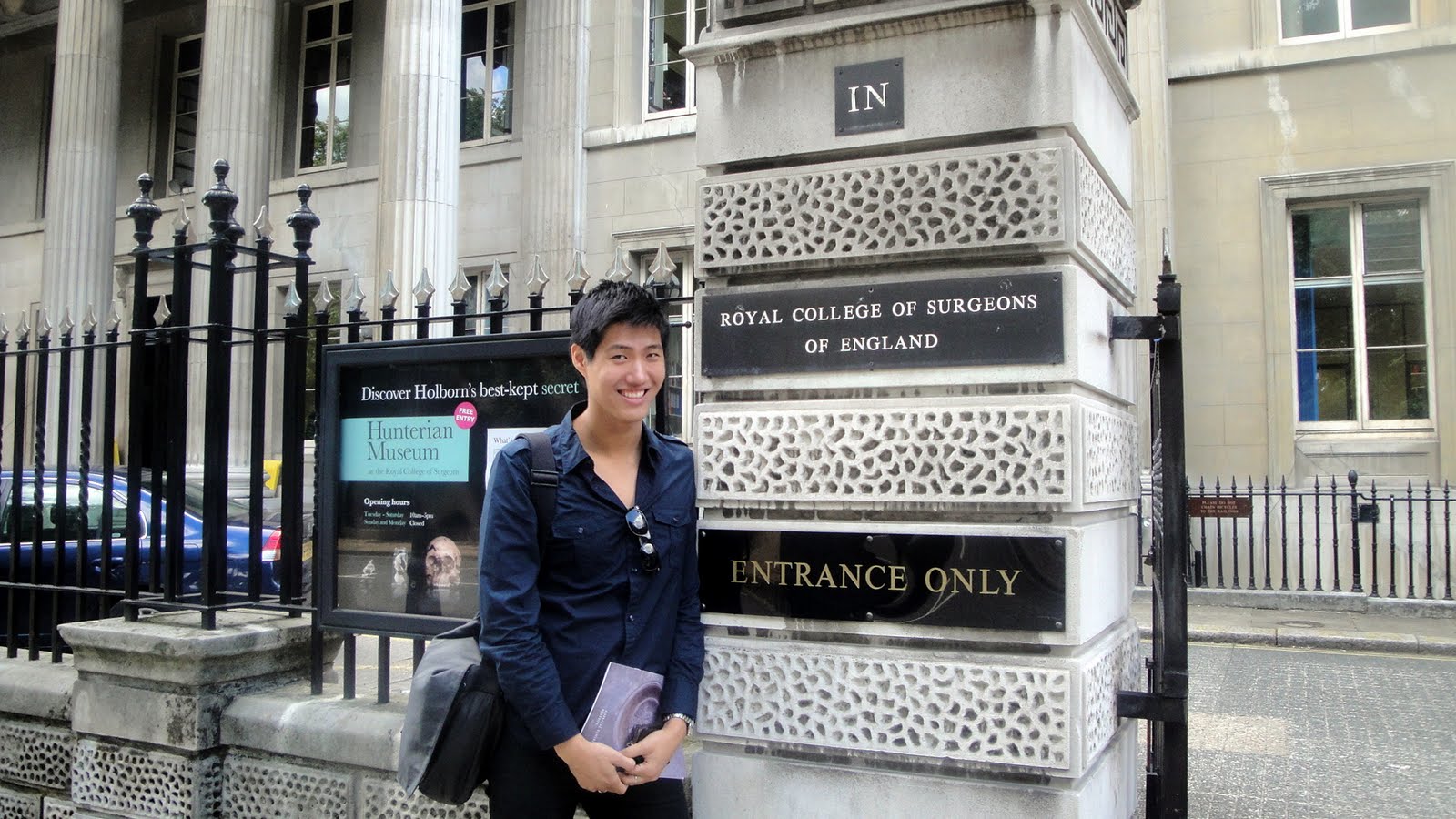
Interestingly, it's important to note that Churchill had either a stutter or a lisp, and that his dentures were fashioned to help overcome his impediment, not to mention help with mastication and self-esteem. That's proof to you folks who think that dentistry is mainly for the aesthetics! Perhaps King George VI too could have invested in a set a la The King's Speech. Just imagine watching a movie called The King's Dentures ...
"Partial upper denture, with gold base, platinum clasps and mineral teeth, made for and worn by Sir Winston Churchill, c. 1941
Dentures like these are normally made to fit as closely as possible to the palate of the wearer. Churchill's denture was different. To compensate for his natural lisp his was designed to leave a gap between the plate and the roof of his mouth, thereby enabling him to maintain his distinctive speaking style. Churchill's dentures were designed by his dentist, Wilfred Fish and made by Fish's dental technician, Derek Cudlipp."
And here are the pics folks! (click to enlarge)


Absolutely stunning! Now who wouldn't want a gold and platinum-laced mouth?
E
Monday, July 4, 2011
British Beginnings
Phew! It's been quite an exhausting day as I just finished my first day of work at the Natural History Museum in London!
To update you guys, after spending a full month and a half back home in sunny Los Angeles, I'm now across the pond (the Atlantic that is, not Pacific) where I'll be working in London for a bit before studying abroad at Queen's College at Oxford University! Very exciting! Also very expensive!!
Anyways, I'm sure that you've heard of the stereotype of British teeth as compared to American teeth. Apparently they're worse. Apparently, that may or may not be correct. I've only spent two full days here so far, and when people do smile (albeit rarely) their teeth seem perfectly normal to me! Time will certainly tell, and I'll be sure to create a post in the future after I've detailed a sufficient number of observations about the Brits and their ways. :)
Pics from the museum! (click to enlarge)
E
7/15 Update! Here's a link to the blog here at the Natural History Museum about my work as an intern!
http://wallaceletters.info/content/more-about-harvard-interns
Basically, there are 7 of us Harvardians doing some cheap but prestigious labor ... it's a pretty fun group (find my twitterlicious Twitter for the real deal) and now you can learn more about what I'm doing with regards to evolutionary biology!
E
To update you guys, after spending a full month and a half back home in sunny Los Angeles, I'm now across the pond (the Atlantic that is, not Pacific) where I'll be working in London for a bit before studying abroad at Queen's College at Oxford University! Very exciting! Also very expensive!!
Anyways, I'm sure that you've heard of the stereotype of British teeth as compared to American teeth. Apparently they're worse. Apparently, that may or may not be correct. I've only spent two full days here so far, and when people do smile (albeit rarely) their teeth seem perfectly normal to me! Time will certainly tell, and I'll be sure to create a post in the future after I've detailed a sufficient number of observations about the Brits and their ways. :)
Pics from the museum! (click to enlarge)
 |
| Natural History Museum -- London |
 |
| Outside |
 |
| Inside |
 |
| Charles Darwin |
 |
| Some good-looking guy |
7/15 Update! Here's a link to the blog here at the Natural History Museum about my work as an intern!
http://wallaceletters.info/content/more-about-harvard-interns
Basically, there are 7 of us Harvardians doing some cheap but prestigious labor ... it's a pretty fun group (find my twitterlicious Twitter for the real deal) and now you can learn more about what I'm doing with regards to evolutionary biology!
E
Monday, June 6, 2011
DONE with the DATs !
For those of you who know me well or have been following my delicious blogging from wherever around the world you may be, today I took my DATs!
The DAT, also known as the Dental Admissions Test, is required for entrance to United States dental schools. There are a total of six sections on the DATs that appear in the order of Biology, General Chemistry, Organic Chemistry, Perceptual Ability, Critical Reading, and Quantitative Reasoning. And to think that you're done with standardized tests after high school :p - sorry, try again folks!
Anyways, the experience was quite nerve-wracking to say the least. I was fingerprinted at least six times at the Prometric Test Center where a whole slew of these American standardized tests are administered, and had a camera happily recording my frantic scribbling on the scratch-boards, my attempts to keep the earplugs that they give you inside my ears, and of course my sacred pre-test rituals.
Above all, the MOST amazing/interesting/frightening thing about the DATs - unlike the MCATs - is that your scores are instantaneous. That's right folks. The scores are INSTANTANEOUS! For better or for worse, you'll find out your numeric scores as well as your scored percentiles a mere few moments after you click the final submit. Crazy right? The fact that the scoring comes out ASAP and that you leave the test center with an official print-out of your scores further contributes to the anxiety that comes with months of preparation for a five-hour test. It's quite the experience. It's not meant for the faint of heart, or for those who are prone to anxiety attacks.
For those of you who want to know how I did ... that's NOT important (well, the scores are important, but that's besides the point :p )! Although I felt that I could have done better on one of the sections (which ironically I aced on all of my practice tests beforehand), I am plenty happy with my performance.
Now I can officially begin my dental school applications, and also go out for a round of drinks !!
Best of luck to all of you who still need to take your DATs, MCATs, GREs, SATs, or whatever test it may be. And trust me on this - study hard and don't lose focus! Set high goals - this is your future we're talking about!
Eric
The DAT, also known as the Dental Admissions Test, is required for entrance to United States dental schools. There are a total of six sections on the DATs that appear in the order of Biology, General Chemistry, Organic Chemistry, Perceptual Ability, Critical Reading, and Quantitative Reasoning. And to think that you're done with standardized tests after high school :p - sorry, try again folks!
Anyways, the experience was quite nerve-wracking to say the least. I was fingerprinted at least six times at the Prometric Test Center where a whole slew of these American standardized tests are administered, and had a camera happily recording my frantic scribbling on the scratch-boards, my attempts to keep the earplugs that they give you inside my ears, and of course my sacred pre-test rituals.
Above all, the MOST amazing/interesting/frightening thing about the DATs - unlike the MCATs - is that your scores are instantaneous. That's right folks. The scores are INSTANTANEOUS! For better or for worse, you'll find out your numeric scores as well as your scored percentiles a mere few moments after you click the final submit. Crazy right? The fact that the scoring comes out ASAP and that you leave the test center with an official print-out of your scores further contributes to the anxiety that comes with months of preparation for a five-hour test. It's quite the experience. It's not meant for the faint of heart, or for those who are prone to anxiety attacks.
For those of you who want to know how I did ... that's NOT important (well, the scores are important, but that's besides the point :p )! Although I felt that I could have done better on one of the sections (which ironically I aced on all of my practice tests beforehand), I am plenty happy with my performance.
Now I can officially begin my dental school applications, and also go out for a round of drinks !!
Best of luck to all of you who still need to take your DATs, MCATs, GREs, SATs, or whatever test it may be. And trust me on this - study hard and don't lose focus! Set high goals - this is your future we're talking about!
Eric
Thursday, May 5, 2011
Wisdom Teeth
Stress and anxiety are in the air as we enter spring semester exam period over here in Cambridge, Massachusetts ... BUT it was even worse for a close friend of mine, whose wisdom teeth were causing her a ton of pain and distracting her from studying for exams!
After 2 full days of enduring pain in the back of her gums (our group of friends was fairly certain that her wisdom teeth were the sources of her discomfort), she got her x-rays taken at Mass General Hospital, and here are the results! Isn't this a stunning image? (click to enlarge)
After 2 full days of enduring pain in the back of her gums (our group of friends was fairly certain that her wisdom teeth were the sources of her discomfort), she got her x-rays taken at Mass General Hospital, and here are the results! Isn't this a stunning image? (click to enlarge)
 |
| Impacted wisdom teeth |
The following day, she got three of her wisdom teeth removed. Take a closer look at the x-ray -- you can probably guess which tooth was NOT removed. If you guessed the one on the upper right-hand side of the image, you're right! As you can see, this tooth appears to be coming at an angle and at a different position than the other three teeth.
The x-ray shown here is called a Panoramic Film, which was taken extra-orally. This is in contrast to the typical Periapical and Bitewing x-rays that are normally taken annually or once every two years. In a Panoramic film, the film is placed outside of the mouth on the opposite of the head from the X-ray source. The result is an extra-oral radiographic view, as shown above.
Anyways, I'll be sure to add an update if and when my friend's final wisdom tooth is removed!
Back to exam-studying ...
Eric
Sunday, April 3, 2011
Human Evolutionary Biology 1421: Teeth
As mentioned previously, at the 2011 Boston Pre-Dental Conference hosted by Harvard's very own Pre-Dental Society (which was a tremendous success by the way, see my previous post!), there were a number of fantastic speakers and presenters. One of whom, Dr. Tanya Smith, Assistant Professor in the Department of Human Evolutionary Biology, gave a truly fascinating presentation not only on her research on dental development and 3D fossil tooth structure, but also on her course to be offered next Fall semester!
Her course is aptly named Human Evolutionary Biology 1421: Teeth. Although the course name may sound ridiculously boring and sleep-inducing to some of you (my friend Judith says this sounds potentially worse than Plant Biology), to the few of us enlightened folk out there - isn't this really exciting? Seriously though ...
Anyways, the last time the course was offered, which was in Fall of 2009, the class received near perfect ratings (4.8 out of 5 on the Harvard Q Guide). Plus, the research seminar-type class is capped at 6 students, and you spearhead your own independent research project. That's right, SIX students! I guess there is life after those humongous general chemistry and organic chemistry lectures.
Here's the course description from the website:
"Teeth are one of the best preserved and most commonly-recovered elements in fossil assemblages. This seminar will focus on ways in which dental remains may inform studies of primate growth and development, ecology, and social structure. Students will read and discuss current scientific literature, engage in histological studies in the Dental Hard Tissue Laboratory, and conduct pilot research projects."
So that probably sent the rest of you packing. BUT to me and a couple of my friends this is amazing!
Another friend says that there might as well be a course titled Human Evolutionary Biology 4321: Eyeballs for people interested in optometry school. What's next, an English department? Ahhh let's pretend she didn't say that ...
See you at shopping week!

Eric
Her course is aptly named Human Evolutionary Biology 1421: Teeth. Although the course name may sound ridiculously boring and sleep-inducing to some of you (my friend Judith says this sounds potentially worse than Plant Biology), to the few of us enlightened folk out there - isn't this really exciting? Seriously though ...
Anyways, the last time the course was offered, which was in Fall of 2009, the class received near perfect ratings (4.8 out of 5 on the Harvard Q Guide). Plus, the research seminar-type class is capped at 6 students, and you spearhead your own independent research project. That's right, SIX students! I guess there is life after those humongous general chemistry and organic chemistry lectures.
Here's the course description from the website:
"Teeth are one of the best preserved and most commonly-recovered elements in fossil assemblages. This seminar will focus on ways in which dental remains may inform studies of primate growth and development, ecology, and social structure. Students will read and discuss current scientific literature, engage in histological studies in the Dental Hard Tissue Laboratory, and conduct pilot research projects."
So that probably sent the rest of you packing. BUT to me and a couple of my friends this is amazing!
Another friend says that there might as well be a course titled Human Evolutionary Biology 4321: Eyeballs for people interested in optometry school. What's next, an English department? Ahhh let's pretend she didn't say that ...
See you at shopping week!

This hygiene is acceptable ... if you've been dead for a few centuries.
Eric
Monday, February 21, 2011
Sink your teeth into something (idioms #4)
Sink your teeth into usually precedes a noun, which may or may not be something edible.
Typically, to sink your teeth into something is to really muster your powers and/or energy either to understand something or to get a good grip mentally, emotionally, and perhaps even physically of something. Similar idioms include digging deep as in digging deep for the solution.
i.e. She finally sank her teeth into the crux of the problem and was able to find a resolution that satisfied both parties.
On the other hand, to sink your teeth into something may also imply having a rather voracious appetite, and consequently the quick and plunging sinking of your teeth into whatever food hits the spot.
i.e. My sister sank her teeth into the brussel sprouts (weird), while my brother sank his teeth into durian fruit (weirder).
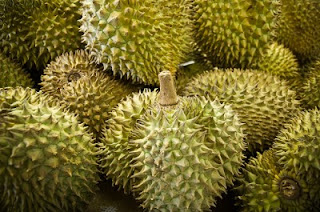


Dur-hog or Hedge-ian, otherwise known as a Durian-Hedgehog hybrid. (weirdest)
Typically, to sink your teeth into something is to really muster your powers and/or energy either to understand something or to get a good grip mentally, emotionally, and perhaps even physically of something. Similar idioms include digging deep as in digging deep for the solution.
i.e. She finally sank her teeth into the crux of the problem and was able to find a resolution that satisfied both parties.
On the other hand, to sink your teeth into something may also imply having a rather voracious appetite, and consequently the quick and plunging sinking of your teeth into whatever food hits the spot.
i.e. My sister sank her teeth into the brussel sprouts (weird), while my brother sank his teeth into durian fruit (weirder).

Durians. Spiky, eh?

Hedgehogs. Cute, right?
Dur-hog or Hedge-ian, otherwise known as a Durian-Hedgehog hybrid. (weirdest)
Eric
Subscribe to:
Posts (Atom)