Showing posts with label England. Show all posts

Monday, August 1, 2011

19th Century Dental Instruments

So as I was going through my camera after visiting the Linnean Society in London, I completely forgot of the hundreds of gems (literal and non-literal) on display at the Hunterian Museum of the Royal College of Surgeons that I had documented. Now I present to you ... some of the most expensive and beautifully fashioned dental instruments ever created!

Set of dental instruments made of steel, mother of pearl and ivory
in a leatherette case (19th century).

Some particular items of note, however, were the great number of outdated dental instruments that are no longer used today. For instance, I came across the dental key, also known as the toothkey. Designed with the door key in mind, the dental key could be inserted horizontally into the mouth where a claw of sorts could be fitted over the tooth. Next, as you can imagine a key turning, the dental key could be turned to loosen tooth. Many cases in England have documented the fracturing of the tooth, fracturing of adjacent teeth, and fracturing of the jaw as a result of using the dental key. However, with the purpose of extracting teeth as a means of treating dental infections before the advent of antibiotics, the toothkey provided the best extraction technology of its time. The dental key, with continuously modified and improved designs, was used predominantly from the 18th through 19th centuries until the development and introduction of forceps.


Left: Vertical dental forceps made of steel
probably for removing small molars and pre molars (19th century).
Right: Modified form of a dental key made of ivory and steel,
probably used for removing molars (late 18th or early 19th century).

Below are photos of these quite exquisite 19th century dental instruments that were commonly used in England. Many are made of ivory and mother of pearl, which today would be rather expensive and - don't forget - illegal (oh the ivory!). Perhaps it was the British tradition, or perhaps it was just the norm in the 19th century to use such fine materials in constructing dental instruments of the Western world. Just take a look below -- don't these ornate instruments remind you of the gold and platinum dentures that were created specifically for Winston Churchill?


Dental instruments for filling and excavating teeth (19th century).


Set of instruments made of steel, silver, and mother of pearl
used for removing tartar from teeth (19th century).

Ivory, platinum, gold, mother of pearl ... mother of expenses!! Perhaps this is where the 'million dollar smile' originated. A great idea for my next idioms post!

E

Saturday, July 23, 2011

Winston Churchill's Dentures

As I continue my mini-expeditions and my studies abroad in England, I've come across a number of hidden gems in the nation where it seems to rain everyday, relentlessly, despite my being from California ...

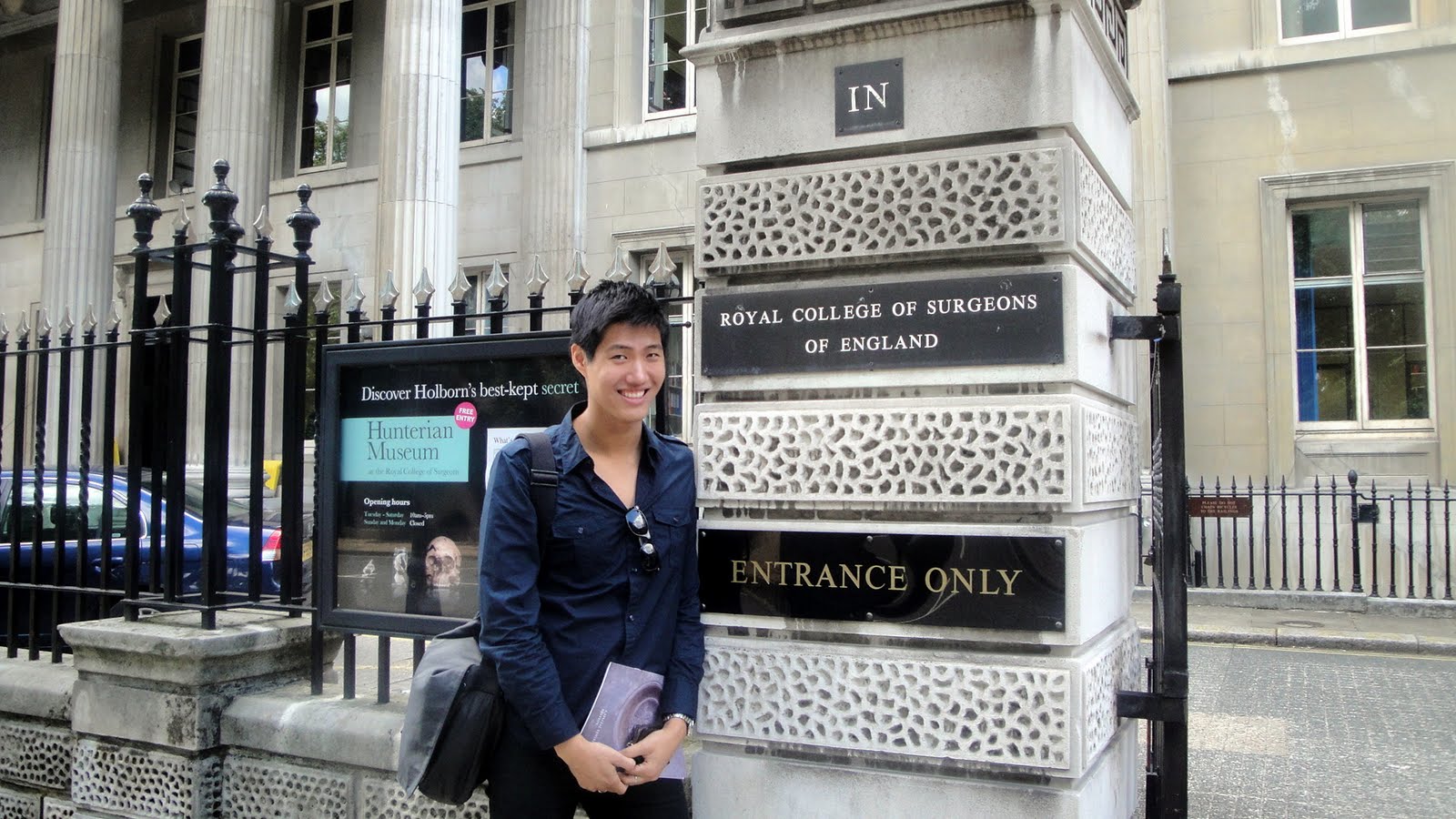
Just yesterday on the program sponsored trip to the Hunterian Museum of the Royal College of Surgeons of England (don't you wish HMS had a museum?) I came across a few eye er mouth-catching exhibits. Naturally, the Royal College of Surgeons had to be in possession of the dentures of Winston Churchill, the man who led Great Britain during WWII. Even more naturally, the great man's dentures had to be one of the most stunning set of dentures I've ever laid eyes upon (pics below).


Interestingly, it's important to note that Churchill had either a stutter or a lisp, and that his dentures were fashioned to help overcome his impediment, not to mention help with mastication and self-esteem. That's proof to you folks who think that dentistry is mainly for the aesthetics! Perhaps King George VI too could have invested in a set a la The King's Speech. Just imagine watching a movie called The King's Dentures ... 

Anyways, here's what the description reads at the Royal College of Surgeons:

"Partial upper denture, with gold base, platinum clasps and mineral teeth, made for and worn by Sir Winston Churchill, c. 1941

Dentures like these are normally made to fit as closely as possible to the palate of the wearer. Churchill's denture  was different. To compensate for his natural lisp his was designed to leave a gap between the plate and the roof of his mouth, thereby enabling him to maintain his distinctive speaking style. Churchill's dentures were designed by his dentist, Wilfred Fish and made by Fish's dental technician, Derek Cudlipp."

And here are the pics folks! (click to enlarge)


Absolutely stunning! Now who wouldn't want a gold and platinum-laced mouth?

E

Monday, July 4, 2011

British Beginnings

Phew! It's been quite an exhausting day as I just finished my first day of work at the Natural History Museum in London!

To update you guys, after spending a full month and a half back home in sunny Los Angeles, I'm now across the pond (the Atlantic that is, not Pacific) where I'll be working in London for a bit before studying abroad at Queen's College at Oxford University! Very exciting! Also very expensive!!

Anyways, I'm sure that you've heard of the stereotype of British teeth as compared to American teeth. Apparently they're worse. Apparently, that may or may not be correct. I've only spent two full days here so far, and when people do smile (albeit rarely) their teeth seem perfectly normal to me! Time will certainly tell, and I'll be sure to create a post in the future after I've detailed a sufficient number of observations about the Brits and their ways. :)

Pics from the museum! (click to enlarge)

Natural History Museum -- London

Outside

Inside

Charles Darwin

Some good-looking guy
E

7/15 Update! Here's a link to the blog here at the Natural History Museum about my work as an intern!

http://wallaceletters.info/content/more-about-harvard-interns

Basically, there are 7 of us Harvardians doing some cheap but prestigious labor ... it's a pretty fun group (find my twitterlicious Twitter for the real deal) and now you can learn more about what I'm doing with regards to evolutionary biology!

E